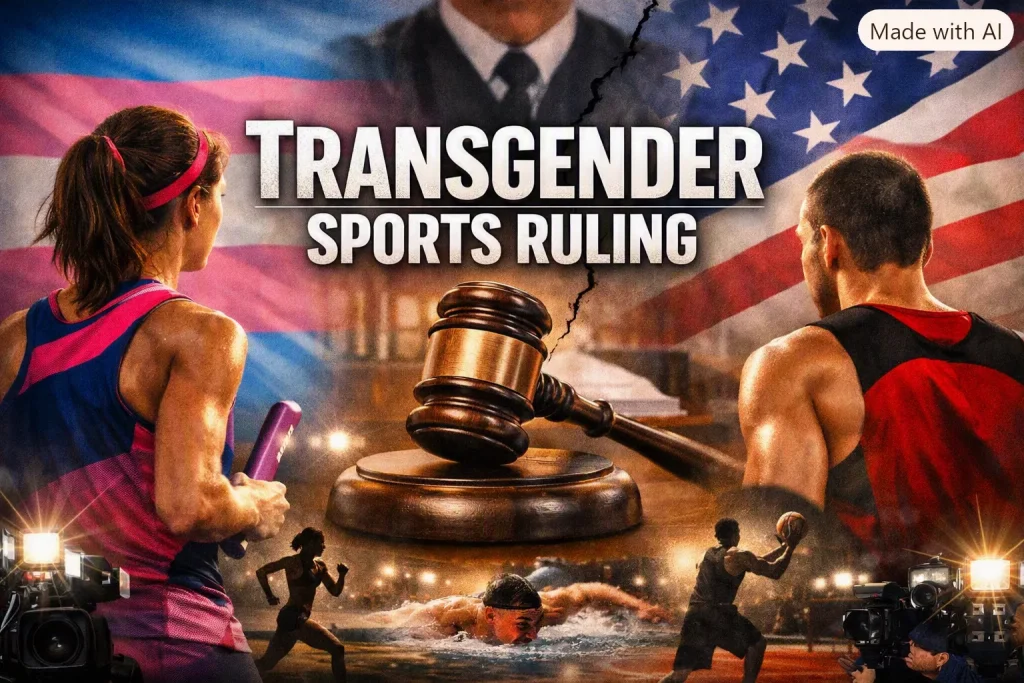
For transgender athletes in their teens and younger, the first whistle of the fall season is a small, ordinary sound. A referee blows it, a game begins, and for most families the only question that morning is whether anyone remembered the orange slices. This year, in a growing number of states, that whistle carries a heavier freight. It marks the first athletic season since the Supreme Court decided, in cases out of West Virginia and Idaho, that states may bar transgender girls from girls’ and women’s school sports without running afoul of Title IX or the Equal Protection Clause.
The rulings — West Virginia v. B.P.J. and Little v. Hecox — came down in early July, and I have spent the weeks since watching the reaction settle into something quieter and more practical than the headlines suggested. A Supreme Court decision is an abstraction until a season starts. Now the season is starting.
It is worth being precise about what the Court did and did not do, because precision is the first casualty of a fight this charged. The Court upheld two state laws that categorically exclude transgender girls from teams matching their gender identity. It did not order every state to follow suit. As the American Civil Liberties Union noted in its plain-language explainer of the decision, states like California and New York remain free to let transgender athletes play. The ruling drew a permission line, not a mandate. What a child can do this autumn now depends, more than ever, on which side of a state border she happens to live.
Supporters of the laws describe them in the language of fairness — a desire, sincerely held by many, to preserve competitive categories they believe were built around physical difference. They are not, in the main, cartoon villains; they are parents and coaches and legislators who think they are protecting something. I try to report them that way, because contempt is lazy and because I have learned more from listening than from winning arguments.
And yet I keep returning to the specific child at the center of these cases: a middle-schooler who wanted to run cross-country with her friends. That is the human unit the policy operates on — not an abstraction about elite competition, but a twelve-year-old lacing up her shoes. Whatever one believes about the outer edges of this debate, the cases that reached the Court were about ordinary kids and ordinary teams, and the ruling reaches all of them the same way.
What happens next will not be decided in Washington. It will be decided in athletic offices and school board meetings, in the awkward conversations coaches are having right now about rosters they submitted months ago. Some states are writing implementation guidance; others are bracing for the lawsuits that a decision like this always leaves in its wake. The legal chapter has closed. The human one is only opening.
I have covered this community long enough to distrust the word final. Courts settle questions; they rarely settle feelings, and they never settle the daily business of belonging. A transgender girl in Boise and one in Brooklyn woke up this month to very different rules about the same simple wish — to be on the team. That gap is now the law of the land. Whether it is the last word is a question the whistle cannot answer.
Common questions
What did the Supreme Court decide about transgender athletes?
In West Virginia v. B.P.J. and Little v. Hecox, the Court upheld laws in West Virginia and Idaho that bar transgender girls from girls’ and women’s school sports, holding that the exclusion does not violate Title IX or the Equal Protection Clause.
Does the ruling ban transgender athletes nationwide?
No. It allows states to enact such bans but does not require them. States without bans — including California and New York — remain free to let transgender athletes compete.
When does the decision take effect?
The rulings came down in early July 2026 and are shaping the fall school-sports season now getting underway.
Which athletes were at the center of the cases?
Both cases involved ordinary students — including a middle-schooler who wanted to run cross-country — rather than elite competitors, and the ruling applies to school teams broadly.
Continue Exploring
More in Politics
Explore by theme
See all in Politics